The University of Melbourne

The University of Melbourne

Unifying the digital experience during a faculty merger

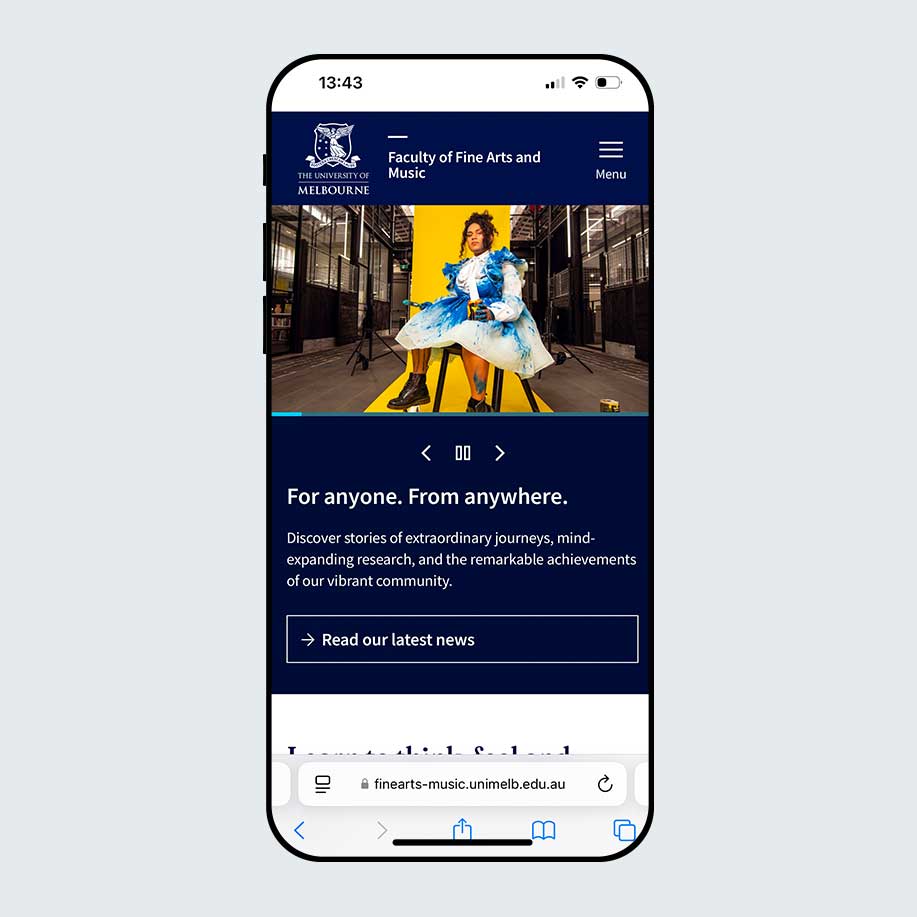
As the University of Melbourne formed the Faculty of Fine Arts and Music, bringing together the Victorian College of the Arts and the Melbourne Conservatorium of Music, I led a strategic design engagement to unify the Faculty’s digital presence.

The work focused on understanding the needs of students, staff, and partners during a period of organisational change, and translating those insights into a clear digital service journey and implementation roadmap. The outcome was a cohesive, user-centred direction to guide the redesign of five faculty websites under a unified brand.
Role
Strategic Design Lead
Focus
Digital strategy, service design, merger transition

“Working with the team helped us make sense of a complex transition. They really got to the heart of what our students and staff needed, and helped us bring it all together in a way that actually felt like us.

–Project stakeholder
The challenge
The creation of the Faculty of Fine Arts and Music represented a significant structural and cultural shift. While VCA and MCM each had strong identities, their digital experiences were fragmented across multiple websites, structures, and content models.

The challenge was to:
  • Support a smooth digital transition during a complex merger
  • Align faculty and university objectives while respecting distinct cohorts
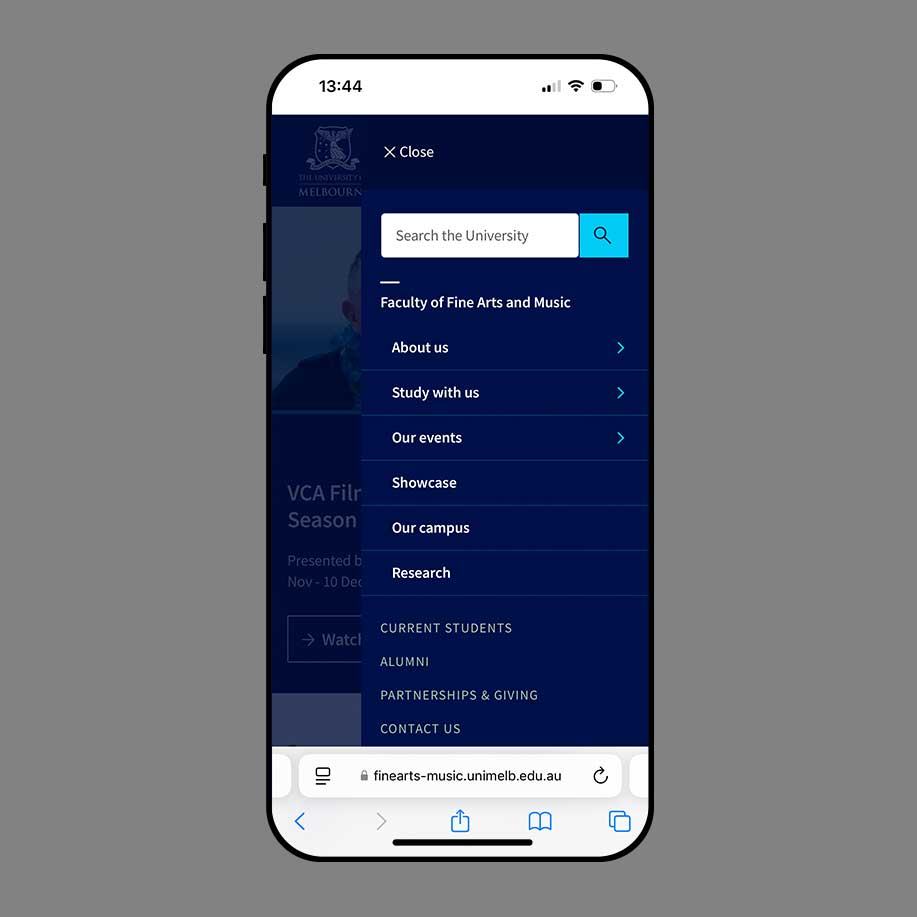
  • Unify five websites into a coherent, navigable ecosystem
  • Ensure the new digital experience reflected the Faculty’s value propositions
This required shared understanding, clarity of purpose, and service-level thinking.

Our research scope:

27 research participants

6 workshops

6 interviews

My role & responsibilities
As Strategic Design Lead, I:
  • Led discovery and strategy to support the Faculty’s digital transition
  • Partnered closely with faculty stakeholders across students, staff, and leadership
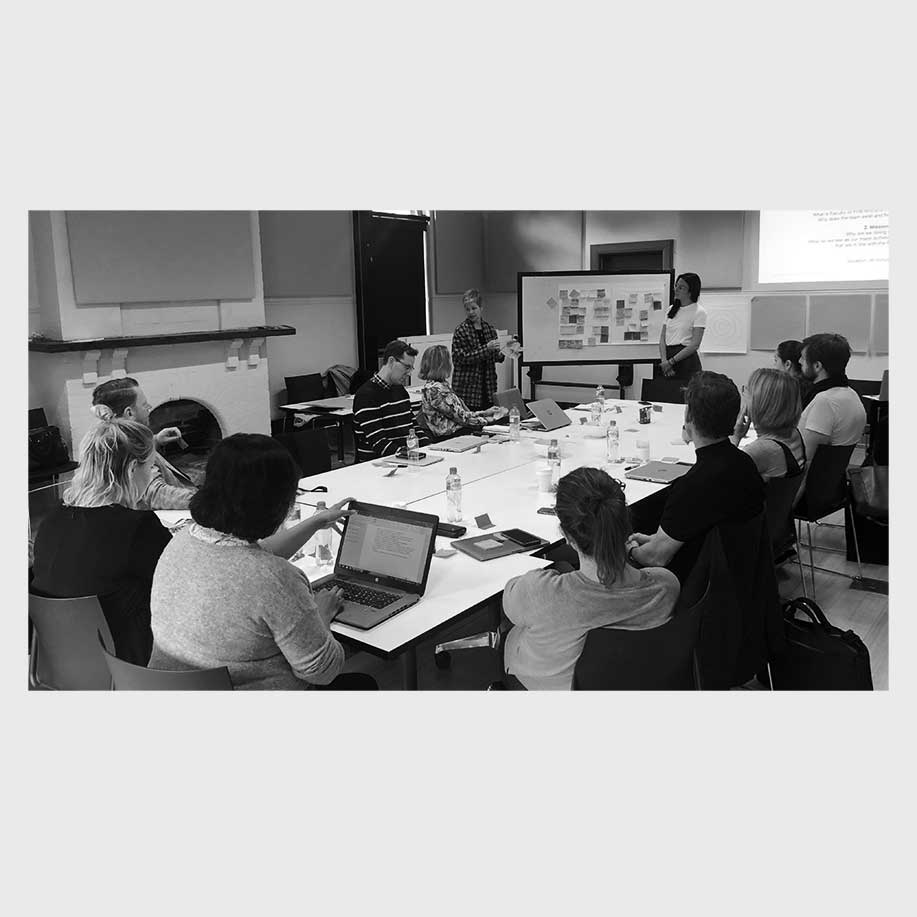
  • Facilitated interviews and workshops to surface needs, expectations, and risks
  • Translated insights into service journeys, IA direction, and delivery guidance
  • Embedded with teams to support adoption of human-centred design practices
Approach & thinking
The work was grounded in human-centred and strategic design, with a strong emphasis on alignment during change.

Key elements included:
  • Stakeholder interviews across key cohorts to understand needs and concerns
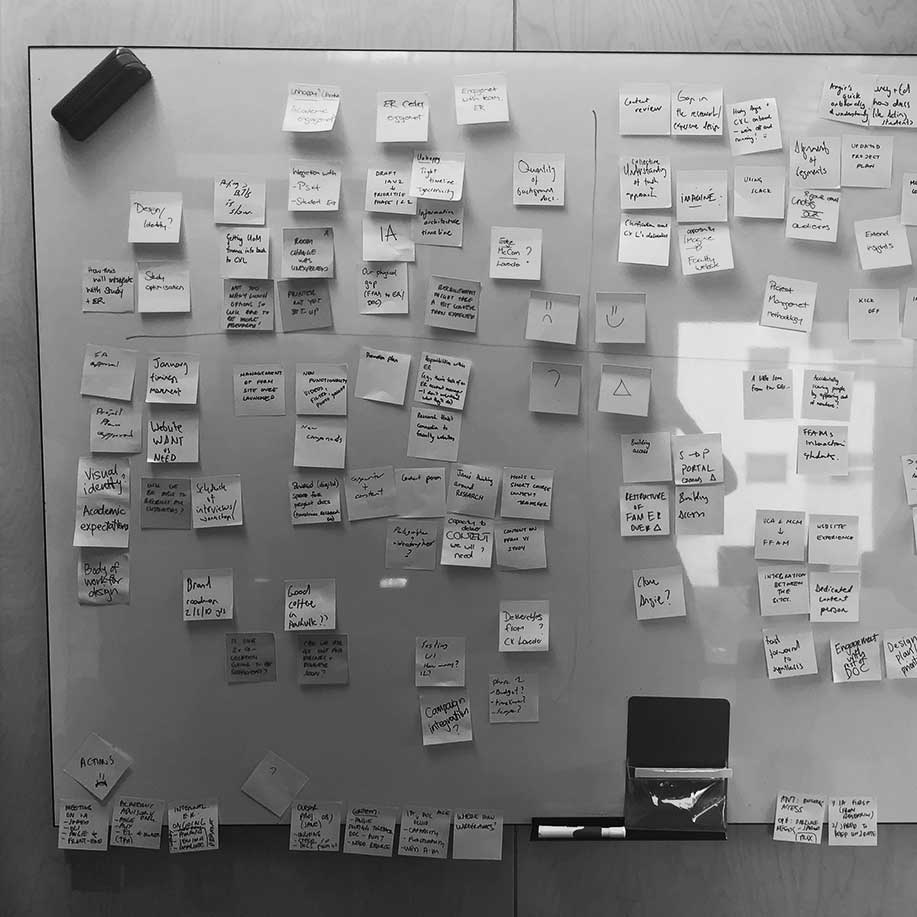
  • Scoping workshops to map current-state journeys and merger impacts
  • Assessment of how digital experiences could support identity, clarity, and continuity
  • Service journey mapping to connect content, navigation, and user intent
  • Integration of journeys and insights directly into information architecture and content planning
By working closely with the Faculty on-site, the focus was on enabling confident decision-making.

–Student exhibition

–Synthesis

–Team retro

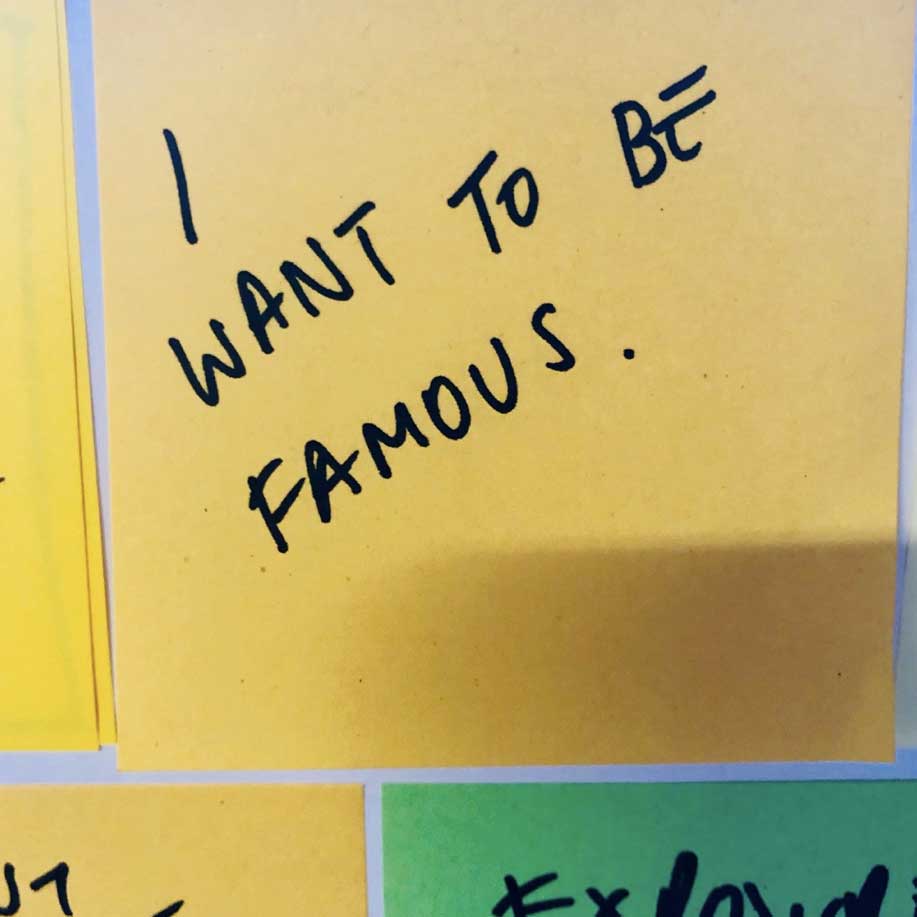
–Student workshop post-it note

Outcomes & impact
The engagement provided a clear foundation for delivery during a period of transition:
  • Defined a shared, user-centred digital service journey for the new Faculty
  • Provided a structured implementation roadmap to guide redesign across five websites
  • Clarified priorities and dependencies to support coordinated delivery
  • Delivered user stories, design patterns, and IA direction for implementation teams
  • Strengthened internal capability in human-centred and strategic design methods
  • Improved alignment between digital, content, and service planning efforts

“This project was about uniting people and stories.

–Project reflection

Read next case study

Led 2 design teams to pilot customer journeys University-wide.
Leading a design team to evaluate money management tools for the Gem App.
Developed the design strategy for a 0-1 consumer energy product (Telstra Energy).