RMIT

RMIT

Piloting university-wide customer journeys to improve graduate outcomes

As part of RMIT’s 2020 strategy to improve graduate outcomes, I led a pilot program to design and test university-wide customer journeys for Industry and Global placements. The work aimed to create a scalable, sustainable service model that better supported students, industry partners, and staff.

Using a human-centred service design approach, I led two design squads to deliver end-to-end experiences across multiple customer segments and disciplines, establishing a shared framework for future rollout across the university.
Role
Strategic Design Lead
Organisation
RMIT
Location
Melbourne
Focus
Service design, customer journeys, operating model, education services

“This work gave RMIT a strategic blueprint for scaling placements, aligning disciplines, driving clarity, and delivering value across students, staff, and partners.

–Project reflection journal
The challenge
Industry and Global placements sit at the core of RMIT’s value proposition, yet experiences varied significantly across disciplines, teams, and touch points. This fragmentation made it difficult to scale placements consistently or identify where operational improvements would have the greatest impact.

As the pilot for RMIT’s customer journeys program, the challenge was to:
  • Understand student, partner, and staff needs across diverse contexts
  • Reveal operational silos and hand-offs affecting experience quality
  • Test whether a unified service model could work across disciplines
  • Create a repeatable approach that could scale university-wide

“Service design gave us the tools to connect the dots, break down silos, and build a model that could truly scale and give us clarity.

–Stakeholder feedback
My role & responsibilities
As Service Design Lead, I:
  • Led two design squads delivering the pilot customer journeys program
  • Set up and guided the service design approach from discovery to delivery
  • Aligned senior stakeholders and cross-discipline teams around shared goals
  • Facilitated workshops and research across five academic disciplines
  • Translated insights into service blueprints, prioritisation frameworks, and roadmaps
  • Supported the organisation to prepare for implementation and change

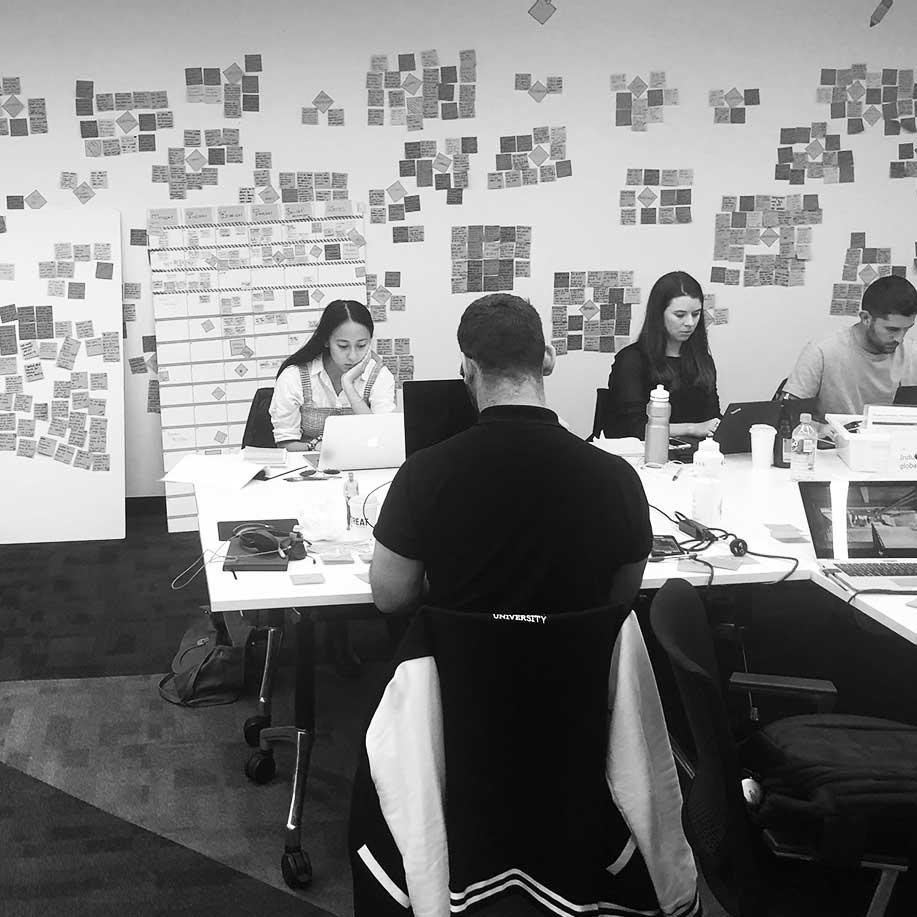
–Team war room

Approach & thinking
The work was grounded in a human-centred, systems-level service design approach, balancing depth of insight with the need to move at pace.

Key elements included:
  • Lean research combining existing data with targeted qualitative and quantitative methods
  • Workshops and interviews with students, staff, and industry partners across five disciplines
  • Current-state service blueprints to surface pain points, dependencies, and silos
  • Competitor and best-practice analysis to inform design rationale
  • Ongoing stakeholder engagement through weekly share-backs and working sessions
Rather than forcing uniformity, the focus was on identifying where standardisation added value, and where flexibility was needed.

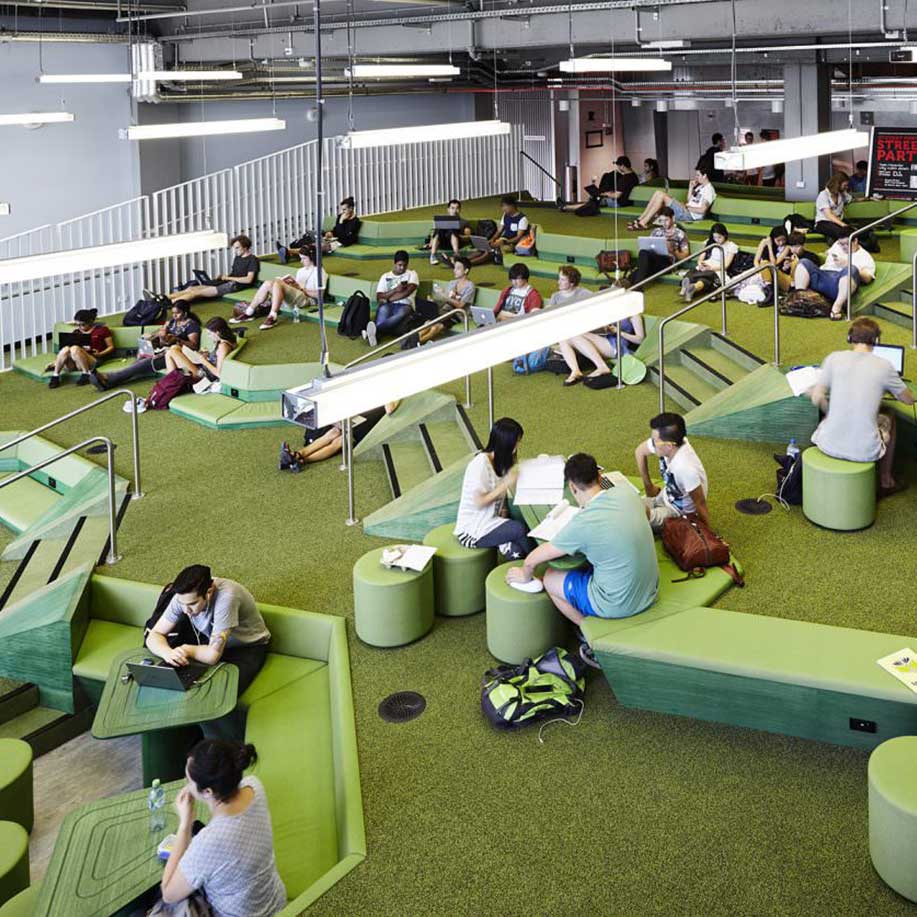
–Student study space

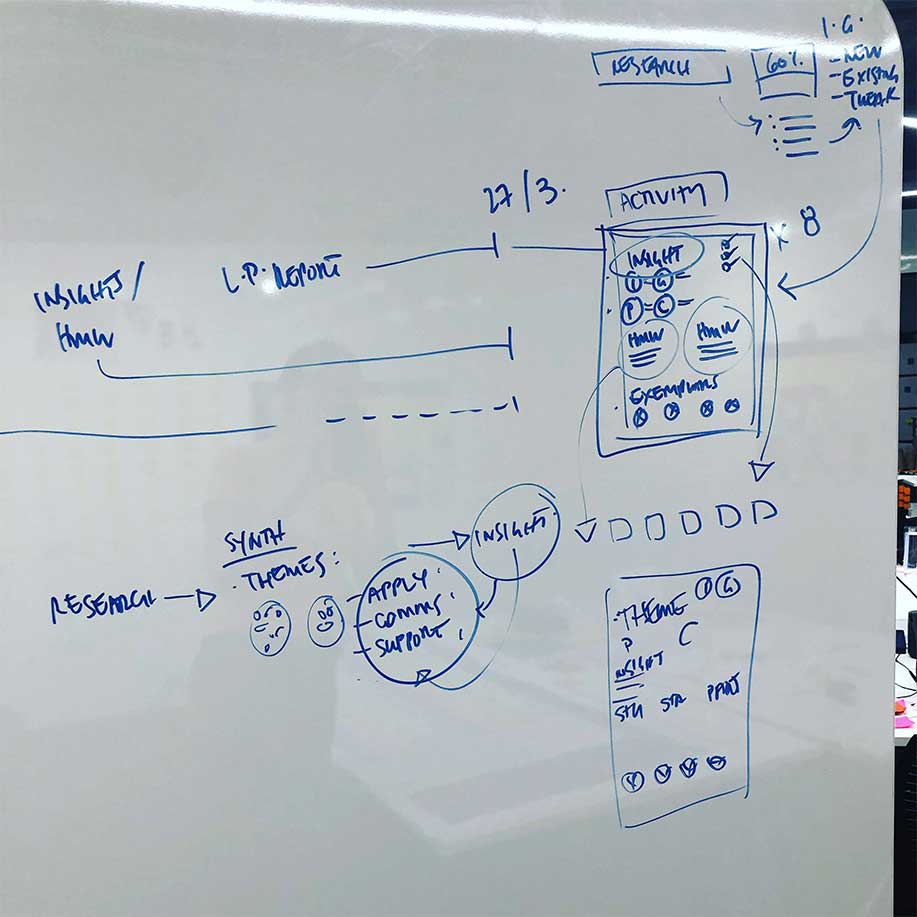
–Design artefacts work-in-progress

–Workshop prep

How might we increase the number of students undertaking a global experience?

–Project brief
Outcomes & impact
The pilot delivered a clear foundation for scaling customer journeys across the university:
  • Created shared visibility of end-to-end student and partner experiences across disciplines
  • Identified high-impact opportunities to improve placement experiences and operational efficiency
  • Designed future-state service blueprints and experience frameworks aligned to strategic goals
  • Enabled prioritisation of initiatives through a structured matrix and phased roadmap
  • Supported change readiness through impact assessments and a communication strategy
  • Aligned related projects within a broader, coherent service design framework
The work demonstrated the value of service design as a unifying mechanism for complex, multi-stakeholder environments.

“Lucy brought clarity and structure to a complex challenge. Her ability to align diverse stakeholders, lead with empathy, and translate insights into action made this project a success from day one.

–Team feedback

Read next case study

Leading a design team to evaluate money management tools for the Gem App.
Developed the design strategy for a 0-1 consumer energy product (Telstra Energy).
Leading a remote 20 person design team working across 5 product teams.